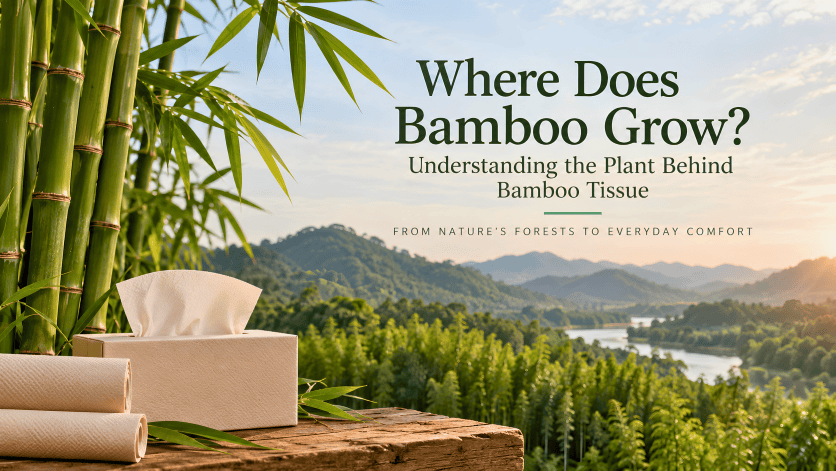
When you think of bamboo, you might picture a dense green forest in Asia. But bamboo is far more widespread than that.
Different bamboo species grow across tropical, subtropical and some mild temperate environments. They can be found in parts of Asia, Africa and the Americas, growing in forests, valleys, hillsides, riverbanks and other landscapes. FAO describes bamboo as a widely distributed woody grass with more than 1,600 species found naturally across tropical, subtropical and mild temperate regions.
That geographical diversity is one reason bamboo has become such a versatile material. For centuries, communities have used it for construction, household articles, crafts and many other purposes. Today, bamboo is also used as a source of pulp for paper and tissue products.
But where bamboo grows is only part of the story. The journey from plant to finished tissue involves the species, growing conditions, harvesting, processing, pulping, converting and quality control. Understanding that journey helps explain why bamboo products are not necessarily all the same.
Where Bamboo Grows: The Short Answer
Where Bamboo Grows: The Short Answer
Bamboo is primarily associated with warm, humid parts of the world, but the full picture is more varied.Many species thrive in tropical and subtropical climates. Others are adapted to cooler environments, including some mountainous and mild temperate regions. This variation exists because “bamboo” refers to a large and diverse group of grasses rather than a single plant.
Bamboo occurs naturally across:
· Asia and the Pacific
· Africa
· Central America
· South America
· Some mild temperate regions
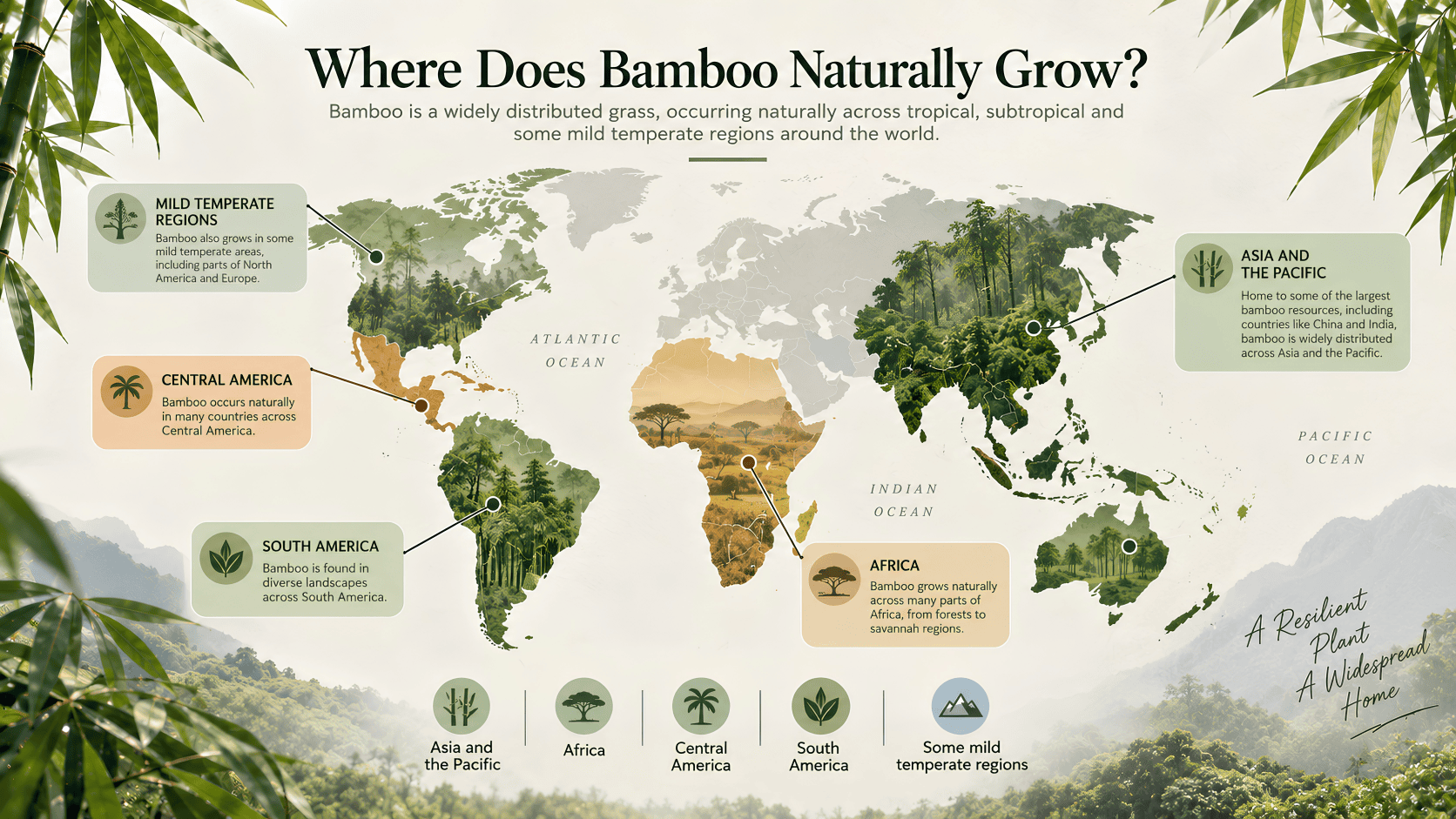
Asia is particularly important because bamboo has deep cultural, agricultural and manufacturing connections across many countries. China and India, for example, are among the countries with substantial bamboo resources.
But bamboo is certainly not limited to Asia.
Why Bamboo Grows in So Many Different Places
Why Bamboo Grows in So Many Different Places
Many bamboo species perform well where there is sufficient warmth, moisture and a suitable growing season. However, bamboo species differ considerably in their environmental requirements. Some are adapted to wetter tropical environments, while others can tolerate cooler conditions or higher elevations.
Temperature and rainfall are useful starting points, but they do not tell the whole story. Soil, water availability, sunlight, elevation and species characteristics can all influence bamboo growth.
This diversity is important when bamboo is considered as a material. A plant growing successfully in one environment does not automatically mean that the same species will perform identically somewhere else.
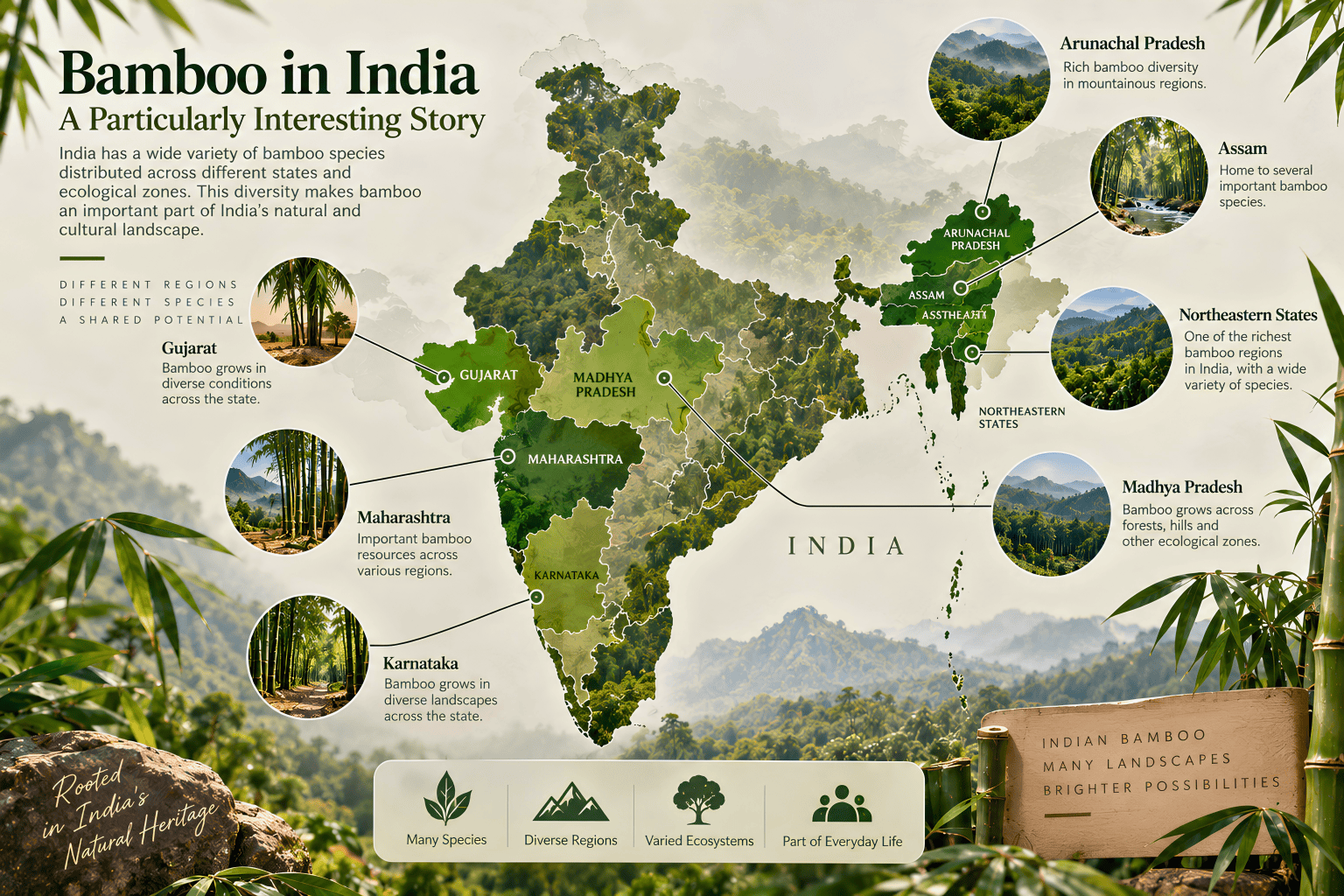
Bamboo in India and Other Major Growing Regions
Bamboo in India and Other Major Growing Regions
Bamboo has been part of everyday life in many Asian societies for generations. It has traditionally been used for furniture, baskets, buildings, utensils, tools and countless household applications. More recently, established bamboo resources and processing capabilities have also supported products such as pulp, paper and tissue.
India has a wide variety of bamboo species distributed across different states and ecological zones. FAO documentation records numerous important bamboo species across regions including Assam, Arunachal Pradesh, Maharashtra, Madhya Pradesh, Karnataka, Gujarat and several northeastern states.
This diversity is significant because bamboo is already part of India's natural and cultural landscape. It also makes bamboo particularly relevant when discussing alternative fibre resources for everyday products.
China is another major bamboo-producing country, with bamboo growing across a wide range of landscapes and climates. FAO documentation records bamboo growing from low elevations to mountainous areas in China.
The important point, however, is that Indian bamboo is not one single raw material. Species, location, growing conditions and processing all matter.
If India Has So Much Bamboo, Why Is Bamboo Pulp Sourced from China?
If India Has So Much Bamboo, Why Is Bamboo Pulp Sourced from China?
India is home to a rich diversity of bamboo species, but having abundant bamboo resources is different from having a mature industrial bamboo-pulp supply chain. India has a long history of using bamboo for pulp and paper, yet the availability of large-scale, consistent and commercially competitive bamboo pulp remains more limited. China, by comparison, has developed a highly established bamboo-processing ecosystem, with extensive infrastructure for converting bamboo into pulp at industrial scale. INBAR reports that China produces around 2.19 million tonnes of bamboo paper pulp annually, accounting for nearly 42% of its non-wood paper pulp production. This established scale and processing infrastructure makes China an important source of bamboo pulp for tissue manufacturing. For manufacturers, therefore, the question is not simply where bamboo grows, but where suitable bamboo fibre can be processed into consistent, tissue-grade pulp at the required volume and specifications.
Does Bamboo Only Grow in Tropical Forests?
Does Bamboo Only Grow in Tropical Forests?
No.
Tropical forests provide excellent conditions for many bamboo species, but bamboo can occupy a much wider range of environments.
Depending on the species, bamboo may grow:
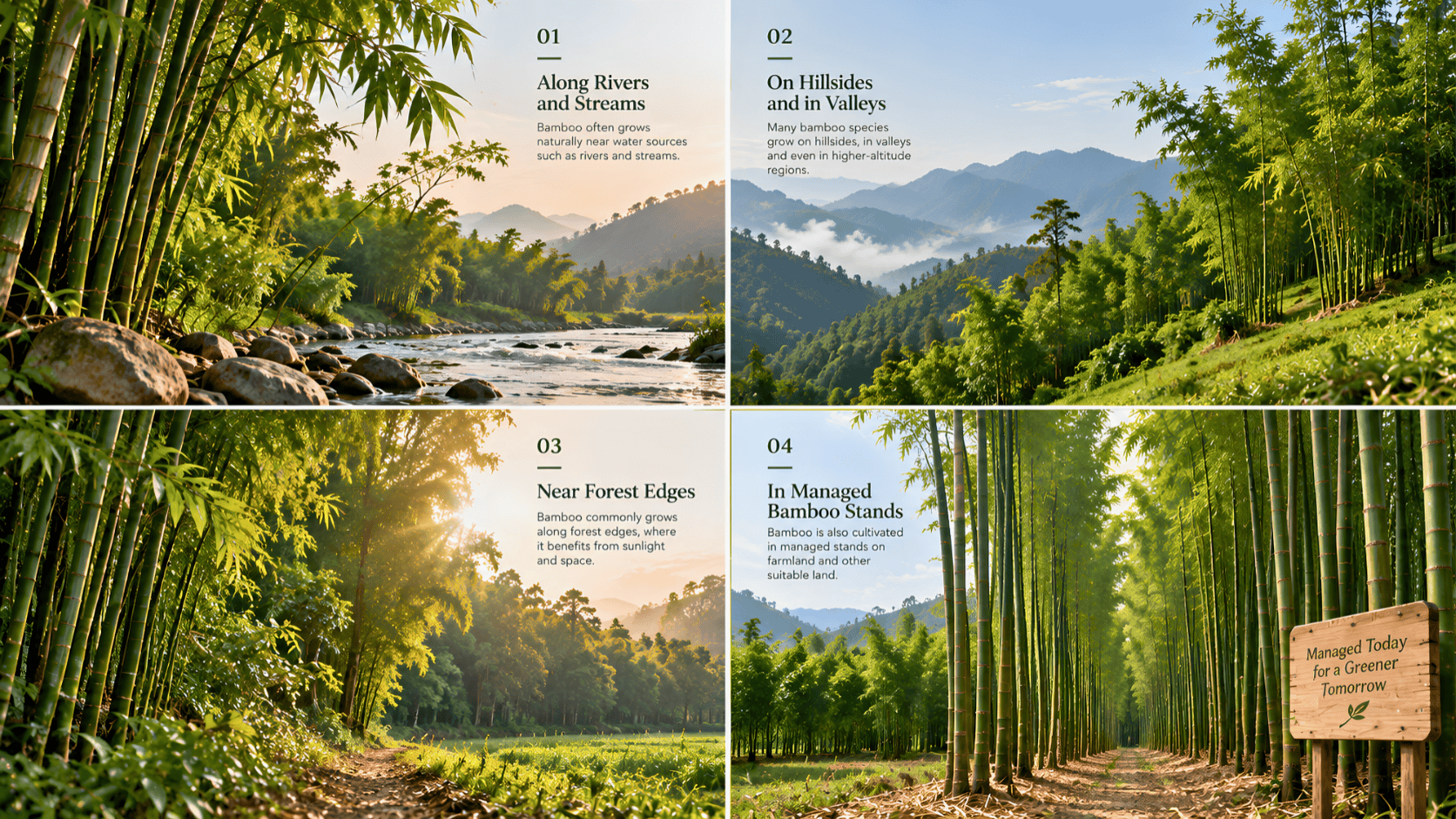
· Along rivers and streams
· On hillsides and in valleys
· Near forest edges
· In humid lowlands
· In managed bamboo stands
· In some higher-altitude environments
· In certain mild temperate climates
FAO notes that bamboo can occur both within forests and outside them, including on farmland and along riverbanks. So there is no single habitat that defines all bamboo species.
The appearance of a bamboo stand can vary considerably depending on the species and its surroundings.
Why Bamboo Species Matter
Why Bamboo Species Matter
One of the easiest mistakes to make when talking about bamboo is treating all bamboo as though it were one uniform material. It is not.
Bamboo species can differ in:
· Culm size
· Fibre characteristics
· Growth habit
· Climate tolerance
· Preferred habitat
· Harvesting characteristics
· Potential end uses
Some species grow in clumps, while others spread through different types of underground rhizome systems. Some are particularly suited to construction or traditional products, while others may be considered for pulp and fibre applications.
For consumers, this distinction may not be visible on a tissue box. But the characteristics of the raw material and the way it is processed can influence the finished paper.
From Bamboo Fibre to Everyday Tissue
From Bamboo Fibre to Everyday Tissue
A bamboo plant does not become a tissue roll simply because it grows quickly. There is a complete manufacturing chain between the two.
A simplified version looks like this:
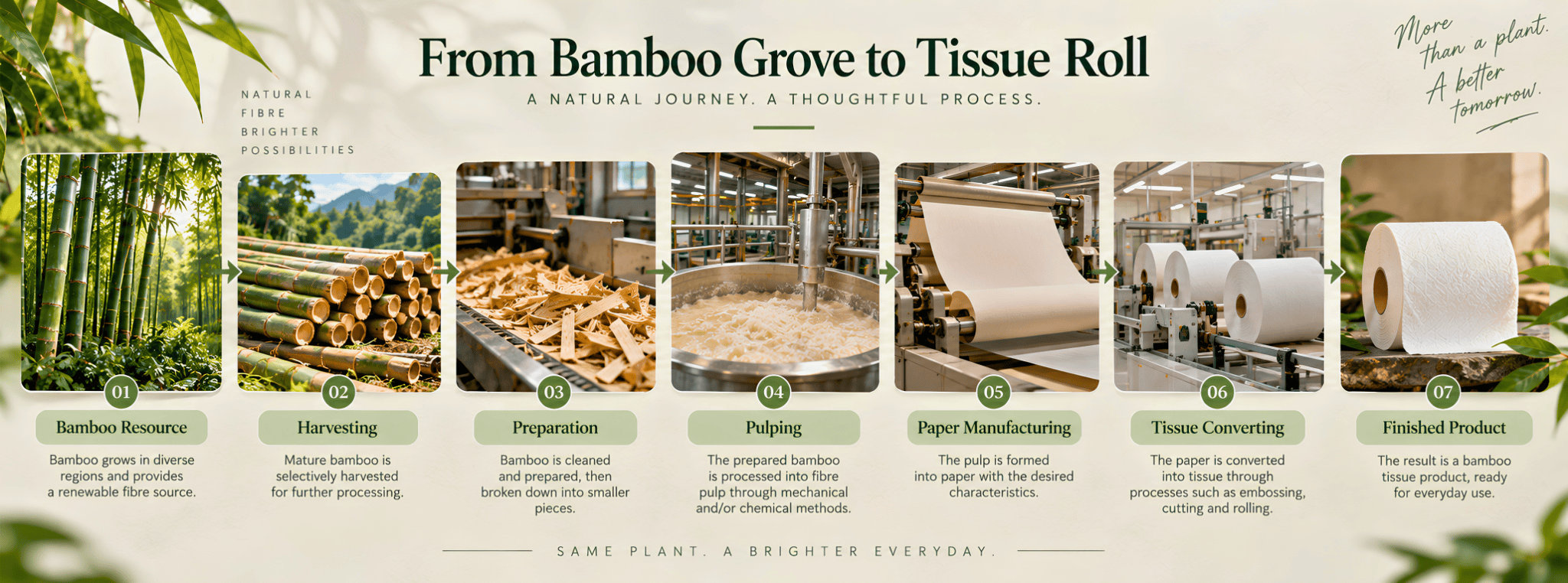
Bamboo → harvesting → preparation → pulping → paper manufacturing → tissue converting → finished product
Each stage can affect the final result. The bamboo must first be suitable for the intended use. The resulting fibre then needs to be processed into pulp and converted into paper with appropriate characteristics for the product being manufactured.
For tissue products, manufacturers have to consider factors such as softness, strength, absorbency, sheet construction and converting performance.
That is why looking only at the word “bamboo” does not tell a consumer everything they need to know about a tissue product. The manufacturing process matters too.
What Does Bamboo Have to Do With Household Tissue?
What Does Bamboo Have to Do With Household Tissue?
Bamboo has long been used for pulp and paper applications, alongside many other traditional uses. FAO identifies pulp and paper among the established applications of bamboo.
For consumers, the interesting part is how that raw material becomes something useful in everyday life.
A kitchen towel needs to handle spills and wiping tasks. Toilet tissue needs to provide the right combination of comfort, strength and practical performance. Facial tissue needs to feel comfortable against the skin while performing its intended everyday function.
The raw material is only the beginning. The finished product has to be designed around the way people actually use it.
Does Bamboo Automatically Make a Tissue Product Sustainable?
Does Bamboo Automatically Make a Tissue Product Sustainable?
Not necessarily. This is an important distinction.
Bamboo itself has characteristics that make it interesting as a renewable plant resource, and its rapid growth is one reason it receives attention as an alternative fibre source. FAO also identifies bamboo's role in land restoration, soil conservation and a variety of material applications.
But the environmental profile of a finished tissue product depends on much more than the plant.
Consider the wider chain:
· How is the bamboo grown?
· How is it harvested?
· How is the fibre processed?
· How is the paper manufactured?
· What materials are used for packaging?
· How efficiently is the product transported?
· How is the finished product used and disposed of?
These questions are why responsible material choices should be considered alongside manufacturing and product design.
For consumers, “made from bamboo” is useful information, but it should be the beginning of the conversation rather than the end.
What Actually Determines Tissue Quality?
What Actually Determines Tissue Quality?
Geography can influence the raw material available to manufacturers, but it does not guarantee the quality of the finished product.
A good tissue product requires consistency.
Manufacturers need to work with appropriate raw materials and controlled production processes so that the finished product performs consistently from one batch to another.
This is especially important for everyday household products. Consumers expect a kitchen towel to perform consistently from one use to the next. The same principle applies to facial tissues and toilet tissue.
For a household essentials brand, material selection and manufacturing discipline therefore go hand in hand.
What About Bamboo in the UAE?
What About Bamboo in the UAE?
The UAE has a very different natural environment from the regions where bamboo grows naturally, so bamboo is not a significant locally grown raw material for tissue production. Instead, bamboo tissue products available in the UAE are primarily supplied through international sourcing and imports.
This makes the distinction between where bamboo grows and where the finished product is used particularly important. The bamboo fibre or pulp may originate in one country, be processed into tissue in another, and ultimately reach consumers in the UAE.
Importing bamboo pulp, tissue or finished products also adds costs through international transportation, logistics, handling, customs and distribution. These additional costs can contribute to a higher price for bamboo tissue compared with products that can rely more heavily on locally available materials or manufacturing.
For bamboo tissue products in the UAE, therefore, the more relevant questions are not simply where the bamboo grows, but where the fibre is sourced, how it is processed, where the tissue is manufactured, and how the finished product is transported and distributed.
The journey from bamboo to the household can cross several countries before the finished tissue reaches the consumer, and each stage of that international supply chain can have an impact on the final price.
What Should Consumers Look for When Buying Bamboo Tissue?
What Should Consumers Look for When Buying Bamboo Tissue?
If you're considering bamboo tissue products, the material is worth understanding, but it should not be the only consideration.
Look at the product as a whole.
1. Check the material information. Look for clear information about what the product is made from and whether the manufacturer provides meaningful specifications.
2. Consider construction. For tissue products, details such as ply, sheet size, sheet count and roll configuration can affect how a product fits into everyday use.
3. Look at the intended purpose. A facial tissue, toilet roll and kitchen towel have different jobs. A good product should be designed accordingly.
4. Consider packaging. Packaging protects tissue during storage and transport, but thoughtful packaging design can also help avoid unnecessary material.
5. Look for credible product information. Responsible brands should be able to explain their material choices and product specifications without relying entirely on vague environmental language.
How Sofierth Approaches Bamboo Essentials
How Sofierth Approaches Bamboo Essentials
At Sofierth, we see bamboo as part of a broader approach to better everyday household essentials.
Our philosophy is “Nature's Soft Embrace” bringing together thoughtful material choices, comfort, practicality and dependable quality.
Sofierth products are made using bamboo pulp, with product ranges designed for different everyday needs across India and the UAE.
Our collection includes bamboo kitchen rolls, toilet tissue and facial tissues, with specifications tailored to their intended use. For example, our XL Bamboo Kitchen Paper Towels are designed around larger sheets and everyday kitchen tasks, while our facial and toilet tissue ranges focus on comfort and practical household use.
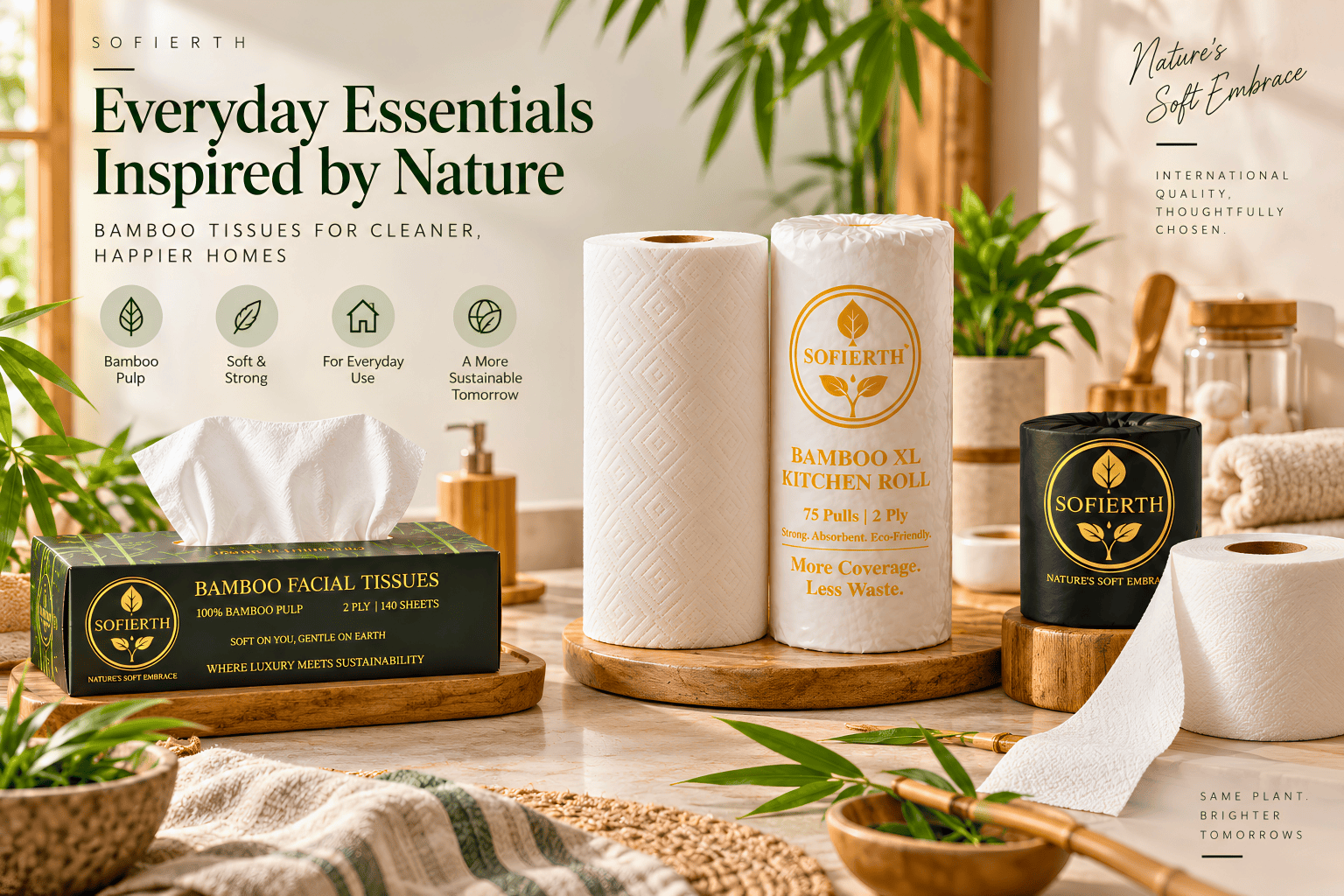
The goal is not simply to put “bamboo” on a package.
It is to make a household essential that people can rely on.
That is the idea behind our positioning: International Quality, Thoughtfully Chosen.
So, where does bamboo grow?
We can say across a surprisingly wide range of warm, humid and mild temperate environments around the world.
The more interesting answer is that bamboo's journey does not end where it grows. The species, climate, growing environment, harvesting practices, processing methods and manufacturing standards all contribute to what eventually becomes a finished bamboo product.
For consumers, that means choosing bamboo tissue should be about more than recognising a familiar plant. It is about understanding the material, asking sensible questions and choosing products that combine thoughtful sourcing with dependable everyday performance.
That is where the story of bamboo becomes the story of the product in your home.
Sources
Sources
Food and Agriculture Organization of the United Nations (FAO), Bamboo - statistics, distribution and applications.
Article written by Nimmada Sindhu (Operations Executive)